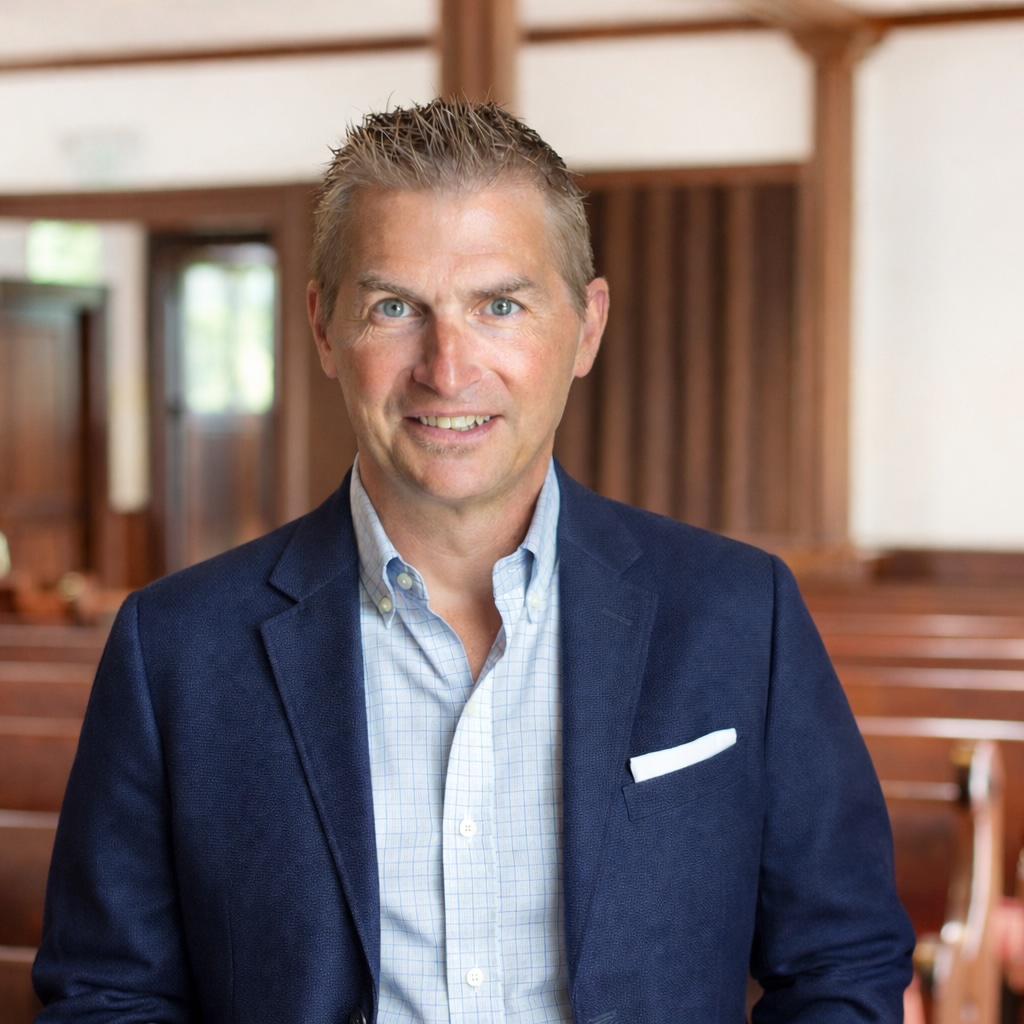
Building an Executive Operating System
Creating scorecards, priorities, meeting rhythms, ownership, and accountability to turn strategy into execution.
At a Glance
Challenge: Cross-functional priorities, competing demands, and limited visibility into execution
Role: Operations Director / Strategic Integrator
Focus: Leadership cadence · Scorecards · Priorities · Accountability · SOPs · Cross-functional execution
Environment: Complex, multi-functional, multi-site organization
The Challenge
As organizations grow, execution often becomes more difficult before leaders fully recognize why.
The problem is rarely a lack of effort. More often, priorities are competing for attention, responsibilities overlap, information is scattered, and leadership meetings become focused on updates rather than decisions.
In complex operating environments, I found that the organization did not need more activity. It needed greater clarity.
The leadership challenge was to create a practical operating system that could connect organizational priorities to the work happening across finance, human resources, technology, facilities, communications, vendors, projects, and day-to-day operations.
The Approach
I began by focusing on a few fundamental questions:
- What are the organization’s most important priorities?
- Who owns each one?
- How will we know whether we are making progress?
- What issues are preventing execution?
- What information does leadership need to see consistently?
- Which processes should be documented rather than repeatedly reinvented?
From there, I helped introduce a more disciplined operating rhythm informed by EOS principles and practical operating experience.
That included establishing clearer quarterly priorities, defined ownership, recurring leadership meetings, scorecards, KPI reporting, issue tracking, and documented processes.
The objective was not to add bureaucracy.
It was to create enough structure that leaders and teams could spend less time figuring out what was happening and more time solving the right problems.
What Changed
Leadership priorities became more visible and measurable.
Instead of important initiatives existing primarily in conversations or individual task lists, priorities could be translated into specific commitments with owners, milestones, and regular review.
Leadership meetings became increasingly focused on execution: reviewing the numbers, identifying obstacles, resolving issues, confirming ownership, and determining next actions.
Scorecards provided a more consistent view of organizational health and made it easier to identify problems before they became crises.
Documented workflows and standard operating procedures reduced dependence on institutional memory and helped create clearer expectations across functions.
Just as importantly, the operating rhythm created a common language around accountability.
The question shifted from:
“Are we working on this?”
to:
“Who owns it, what is the next milestone, and are we on track?”
The Result
The organization gained a stronger connection between leadership intent and day-to-day execution.
Cross-functional work became easier to coordinate because priorities, responsibilities, and reporting expectations were more explicit.
Leadership had better visibility into performance, open issues, and organizational risks.
Teams had clearer direction.
And recurring operating rhythms helped move the organization from a more reactive environment toward a more proactive one.
The value of an executive operating system is not the meeting structure or the scorecard itself.
It is the organizational clarity those tools create.
When people understand what matters, know what they own, and have a consistent mechanism for identifying and resolving obstacles, execution becomes significantly more reliable.
What I Took From It
I have become convinced that good strategy often fails for surprisingly ordinary reasons.
Ownership is unclear.
Priorities change without being communicated.
Problems remain unresolved because nobody has a forum for addressing them.
Important information arrives too late.
An effective operating system solves many of those problems by creating rhythm.
It gives leadership a consistent way to translate vision into priorities, priorities into ownership, ownership into action, and action into measurable results.
That is the work I naturally gravitate toward as an operator and Integrator.
Creating Integrated Organizational Systems
Connecting finance, CRM, communications, workflow, and reporting platforms to eliminate manual processes and improve visibility.
At a Glance
Challenge: Fragmented systems, inconsistent workflows, and limited organizational visibility
Role: Operations & Technology Leader
Focus: Systems migration · Data integrity · Workflow design · Finance systems · Reporting · Staff adoption
Platforms: Rock RMS · Sage Intacct · Organizational technology infrastructure
Environment: Multi-campus nonprofit and ministry organizations
The Challenge
Technology problems are rarely just technology problems.
In complex organizations, disconnected platforms can create duplicated work, inconsistent data, unclear ownership, manual processes, and frustration for the people trying to use them.
Over several years of operational leadership, I worked in organizations where technology touched virtually every function: finance, membership and constituent management, communications, facilities, events, people, reporting, and leadership decision-making.
The challenge was not simply to install new software.
It was to create a more connected operating environment.
The Approach
My starting point was always the workflow rather than the platform.
Before changing a system, I wanted to understand:
- Where does information originate?
- Who needs it next?
- What decisions depend on it?
- Where are people entering the same information more than once?
- Which processes rely on workarounds?
- Where does ownership become unclear?
- What information does leadership need but cannot easily access?
That process helped distinguish genuine system requirements from habits that had developed around older technology.
At East Cooper Baptist Church, I led the migration from FellowshipOne to Rock RMS.
The project required much more than moving records from one database to another. It involved understanding how staff actually used the system, improving data integrity, rebuilding workflows, improving reporting, and creating an environment that was easier for staff to use and maintain.
Later, at Church of the Holy Cross, I helped lead the transition from ACS to Rock RMS while supporting broader organizational systems, including Sage Intacct and operational processes across two campuses.
What Changed
The migrations created an opportunity to rethink how information moved through the organization.
Rather than recreating every legacy process inside a new platform, workflows could be redesigned around current needs.
Data structures became more intentional.
Reporting became more useful.
Staff had greater clarity about where information belonged and how systems should be used.
Administrative processes could be automated or standardized rather than relying entirely on manual follow-up.
Financial, operational, and constituent information became easier to organize and access.
And because system implementation was treated as an organizational project rather than simply an IT project, adoption became part of the work from the beginning.
Training, workflow design, documentation, communication, and ownership were all considered alongside the technical implementation.
The Broader Impact
The result was not merely better software.
It was improved organizational infrastructure.
Better information supported better decisions.
Clearer workflows reduced unnecessary administrative friction.
More consistent data improved reporting and visibility.
Integrated systems helped teams work across departmental boundaries more effectively.
And leadership gained a stronger foundation for managing a growing, multi-site organization.
That distinction matters.
Organizations often purchase technology expecting it to fix operational problems. But technology usually amplifies the process underneath it.
If the workflow is unclear, the technology simply digitizes the confusion.
The real work is understanding the organization first—and then designing the system around how the organization needs to operate.
What I Took From It
I have learned to approach systems work from the perspective of an operator.
The question is not:
“What can this software do?”
The better question is:
“What does this organization need to accomplish, and how should people, processes, data, and technology work together to make that easier?”
That approach has shaped the way I evaluate CRM platforms, financial systems, workflow automation, reporting, communications technology, and organizational tools.
The best systems often become almost invisible.
They give people the right information at the right time, remove unnecessary friction, and allow the organization to focus more energy on the work that actually matters.
Turning New Markets Into Revenue
Using market insight, positioning, relationships, and execution to create millions of dollars in new business.
At a Glance
Organization: Boulevard Design Group
Role: Founder & Principal
Focus: Growth strategy · Business development · Market expansion · Brand positioning · National accounts
Selected Results: $5M+ incremental revenue · $3M in new-market sales · $2M from existing product lines
Channels & Relationships: Pottery Barn / Williams-Sonoma · Crate & Barrel · Restoration Hardware
The Opportunity
Growth rarely comes from a single tactic.
It usually comes from seeing opportunities that others have overlooked, understanding what customers actually value, positioning the offering correctly, and then doing the sustained work required to turn that opportunity into revenue.
That was a significant part of my work through Boulevard Design Group.
Working with furniture manufacturers and related organizations, I helped companies evaluate their products, brands, customers, sales channels, and market opportunities with one central question:
Where is the next meaningful source of growth?
Sometimes the answer was a new market.
Sometimes it was a new customer.
Sometimes the opportunity already existed inside the company’s current product line but had not been positioned or developed effectively.
The Approach
My work typically combined strategy with direct execution.
I evaluated product portfolios, competitive positioning, customer needs, pricing, retail presentation, sales channels, and potential partnerships.
But the work did not stop with recommendations.
I also helped open doors.
That meant developing relationships with buyers and decision-makers, identifying appropriate national retail channels, positioning products for those accounts, building the business case, coordinating with manufacturers, and supporting the long sales process required to turn an opportunity into a meaningful customer relationship.
Over time, that work helped create and support relationships with nationally recognized retailers including Pottery Barn and Williams-Sonoma, Crate & Barrel, and Restoration Hardware.
The Results
Across multiple growth initiatives, the work produced measurable commercial impact.
A coordinated growth strategy generated more than $5 million in incremental revenue within three years.
Additional focus on existing product lines generated approximately $2 million in additional revenue, demonstrating that growth did not always require developing something entirely new.
In another initiative, identifying and developing new markets and channels helped produce approximately $3 million in new sales within two years.
A retail-environment redesign initiative also contributed to a 40% increase in sales, reinforcing the importance of understanding not only the product but the way customers experience and evaluate it.
Why It Worked
The results were not driven by a single sales technique.
They came from connecting several disciplines:
Market insight
Understanding where customer demand and company capabilities intersected.
Positioning
Making sure the product and brand were presented in a way that made sense to the target customer.
Relationships
Building credibility with buyers, partners, manufacturers, and decision-makers.
Execution
Following opportunities through the many steps between an initial conversation and realized revenue.
Operational awareness
Recognizing that winning a major account only creates value if the organization can successfully support it.
That last point became especially important in my broader career.
Sales, operations, finance, marketing, product, and customer experience are not independent functions.
Sustainable growth requires them to work together.
What I Took From It
My years in business development shaped how I think about executive operations today.
Operators can sometimes become overly focused on internal efficiency.
Growth leaders can sometimes become overly focused on revenue.
Strong organizations need both perspectives.
A new customer creates operational requirements.
A pricing decision affects margin.
A product decision affects inventory and service.
A new channel creates systems, people, and fulfillment demands.
That is why I continue to view growth as an organizational discipline rather than simply a sales function.
The goal is not merely to generate revenue.
It is to build revenue that the organization can support, serve, and sustain.
That intersection of growth and execution has remained one of the defining themes of my career.

